Fall Is the Best Time to Catch Wood Rot Before Richmond Winter Makes It Worse
By Emmanuel Gomez, ECMJ Homes · · 3 min read
Leaves are falling, the humidity is finally easing, and most Richmond homeowners are thinking about pumpkins, not planks. But fall is exactly when wood rot should be on your radar.
Rot needs moisture to grow, and our hot, wet summers give it plenty. By October, the damage that started over the summer is often already inside your trim, siding and decking. Then winter arrives with freezing nights and thawing days, and that is when small problems turn into expensive ones.
Why Winter Makes Wood Rot Worse
Wood rot is caused by fungi that feed on damp wood. Once the wood stays wet for long periods, the fungi take hold and break down its fibres, leaving it soft, crumbly and weak.
Central Virginia winters add another problem. Water that has soaked into damaged wood freezes at night and expands, then thaws during the day. Repeat that cycle through December, January and February, and cracks widen, paint peels and more moisture gets in. A patch you could have repaired in October can become a full replacement by spring.
Your Fall Wood Rot Walkaround
Grab a cup of coffee and take ten minutes to walk around your home. Check these spots first, because they collect water more than any others:
Door frames and thresholds, especially at the bottom corners where rain splashes and sits.
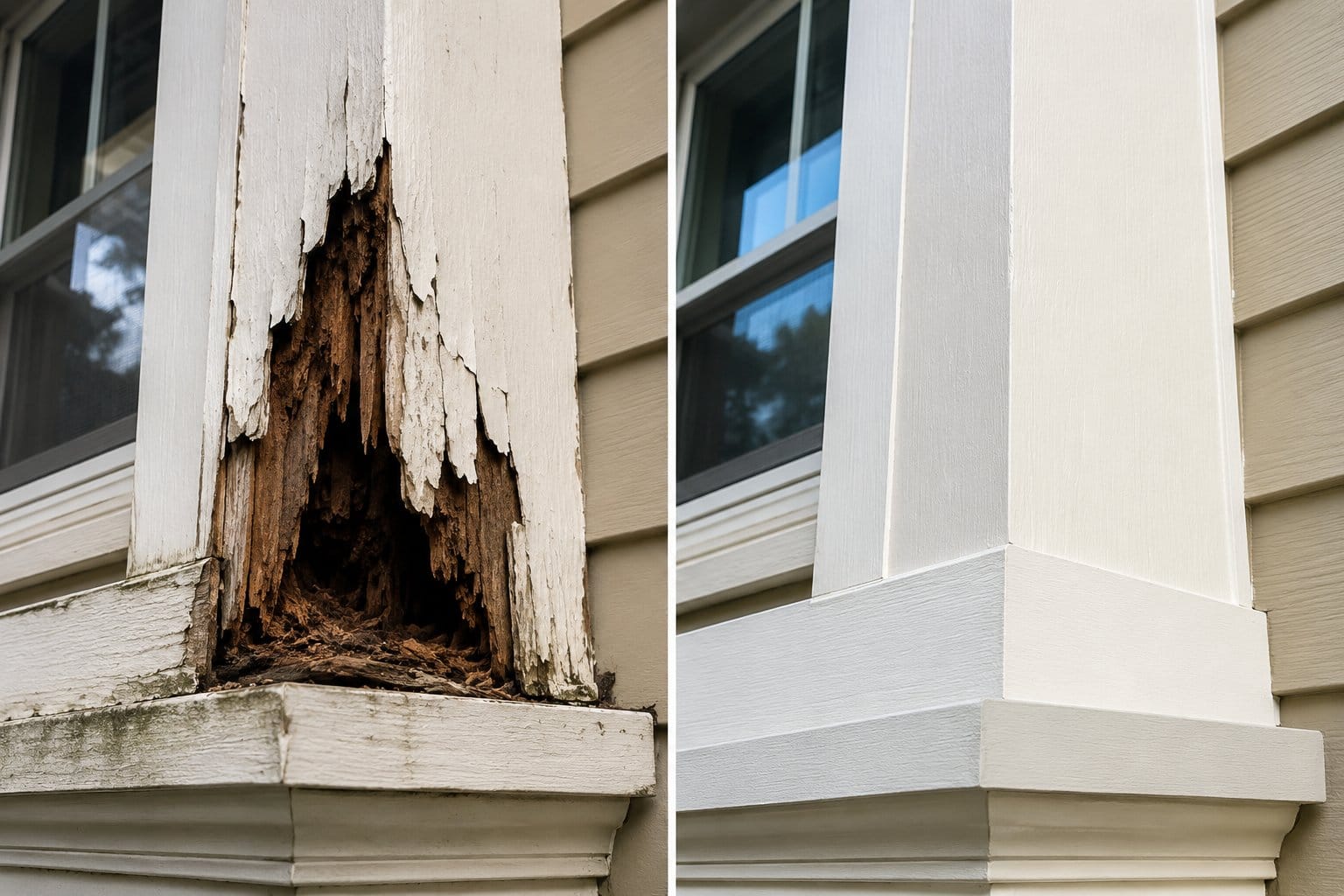
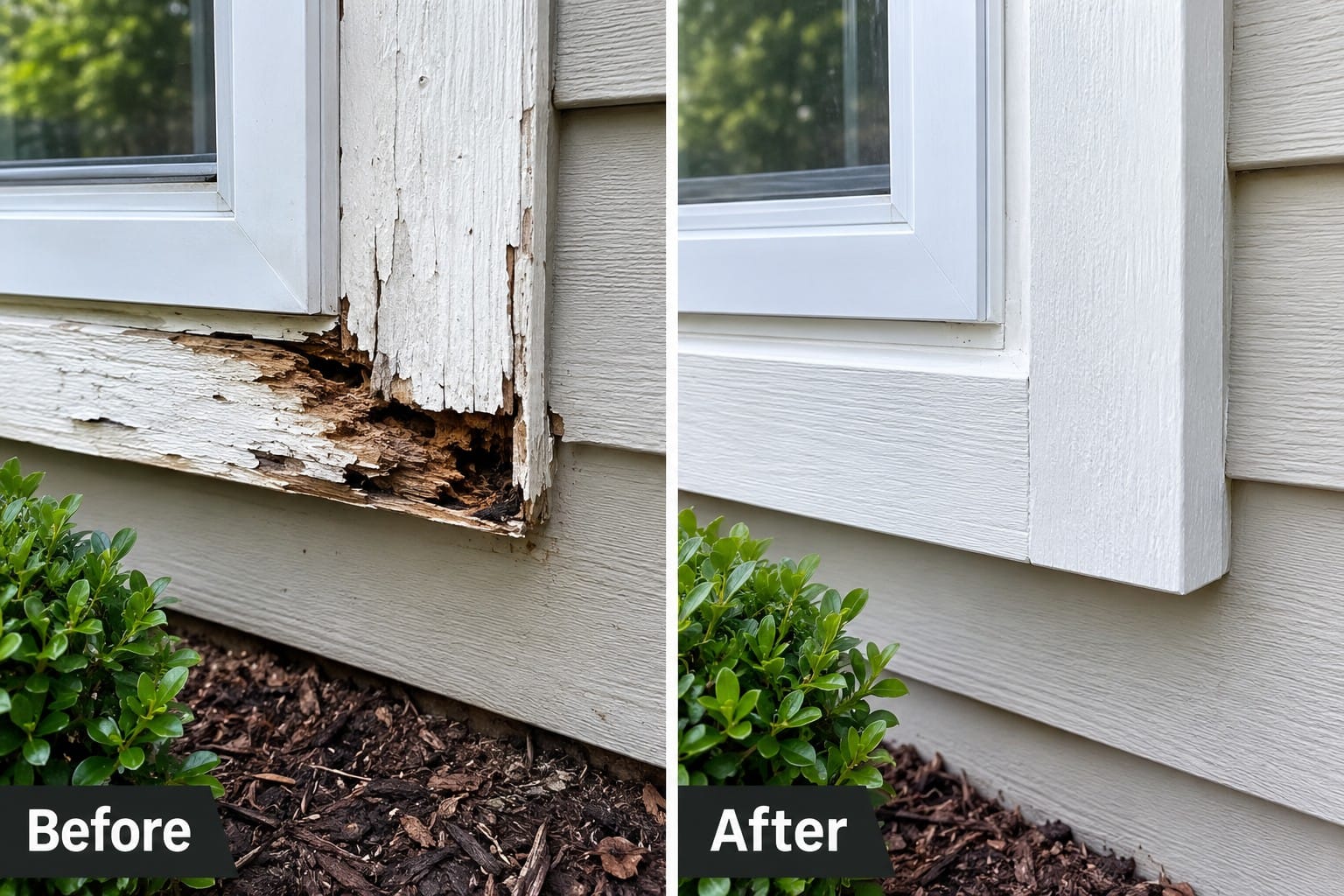
Window sills and trim, where condensation and failed caulk let moisture creep in.
Fascia boards and soffits under the roofline, which suffer when gutters overflow or leak.
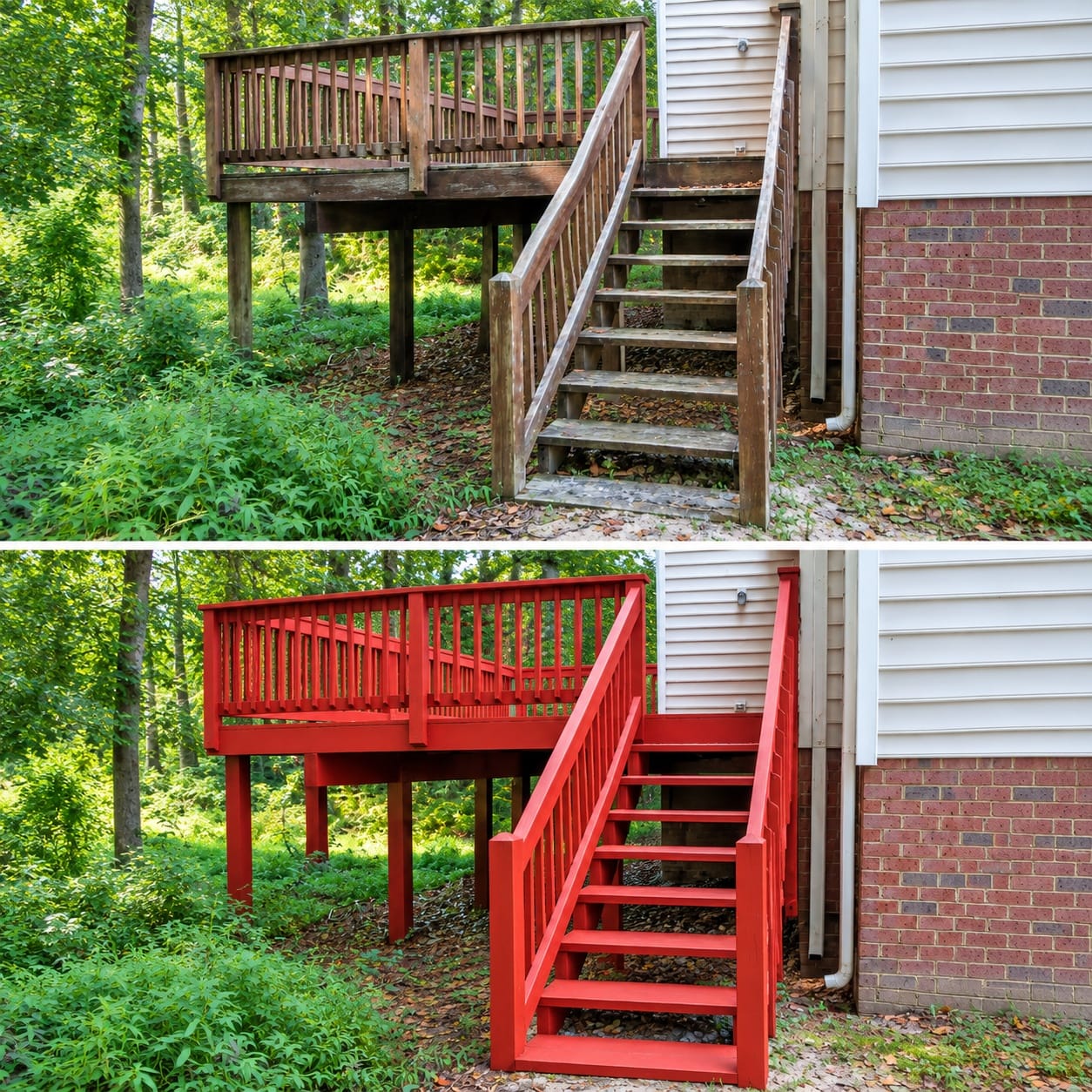
Deck boards, railings and stair stringers, where water pools and never fully dries.
Porch columns and steps, particularly where wood meets concrete.
Siding near the ground and around downspouts, where splashback keeps boards damp.
Look for paint that bubbles, cracks or peels, dark stains, soft spots, warped boards, or a musty smell near the wood. If wood feels spongy when you press it, or crumbles when probed, treat it as rot.
Why You Should Not Just Paint Over It
It is tempting to slap on fresh paint or caulk and call it a day. Unfortunately, covering rotten wood traps moisture inside and lets the decay keep spreading out of sight. The paint will fail again, usually sooner than the first time.
Proper wood rot repair means finding the source of the moisture, cutting out all the damaged wood, replacing it with sound material, and sealing and finishing it so water stays out. Fixing the cause matters as much as fixing the damage. Otherwise the rot simply comes back.
What Fall Repairs Protect
Getting repairs done before winter protects more than your trim. It helps safeguard your home’s structure, keeps pests like carpenter ants and termites from moving into soft wood, and preserves your curb appeal. It can also keep a small repair from growing into a bigger project that disrupts your holidays or your budget.
Simple Habits That Help
Keep gutters clean so water flows away from your home. Trim back shrubs and branches that hold moisture against siding. Re-caulk gaps around windows and doors. Repaint or reseal exposed wood before the paint fails. And check your home again each spring and fall.
Let ECMJ Homes Take Care of It
If you spot soft wood, peeling paint or damage you are not sure about, do not wait for winter to decide for you. The ECMJ Homes team repairs wood rot on doors, windows, trim, siding, decks and more, and we fix it properly so it stays fixed.
Call 804-719-1657 or visit ecmjhomes.com to book your free estimate today. ECMJ Homes proudly serving Richmond, VA and surrounding areas.