6 Hidden Spots Where Rot Starts (And What It Costs You to Ignore It)
By Emmanuel Gomez, ECMJ Homes · · 3 min read
Walk around your house right now and everything might look fine. Fresh paint, solid trim, a door that closes just right. But in Richmond, where hot, humid summers meet wet springs and freezing winters, wood rot often starts out of sight and does its damage quietly for months before you notice.
The good news is that rot follows a pattern. It needs moisture, and it goes where moisture collects and stays. Check these six spots first.
1. The Bottom of Door Frames and Door Sills
Rain splashes up, water runs down, and the lowest few inches of an exterior door frame stay damp longer than anywhere else on the house. If the paint is bubbling or the wood feels soft near the floor, rot has likely set in behind it.
2. Window Sills and the Trim Around Windows
Window sills slope poorly over time, and caulk cracks with every season. Water sneaks behind the trim and sits there. Press gently on the corners of the frame. Wood should feel firm, never spongy.
3. Fascia Boards and Soffits
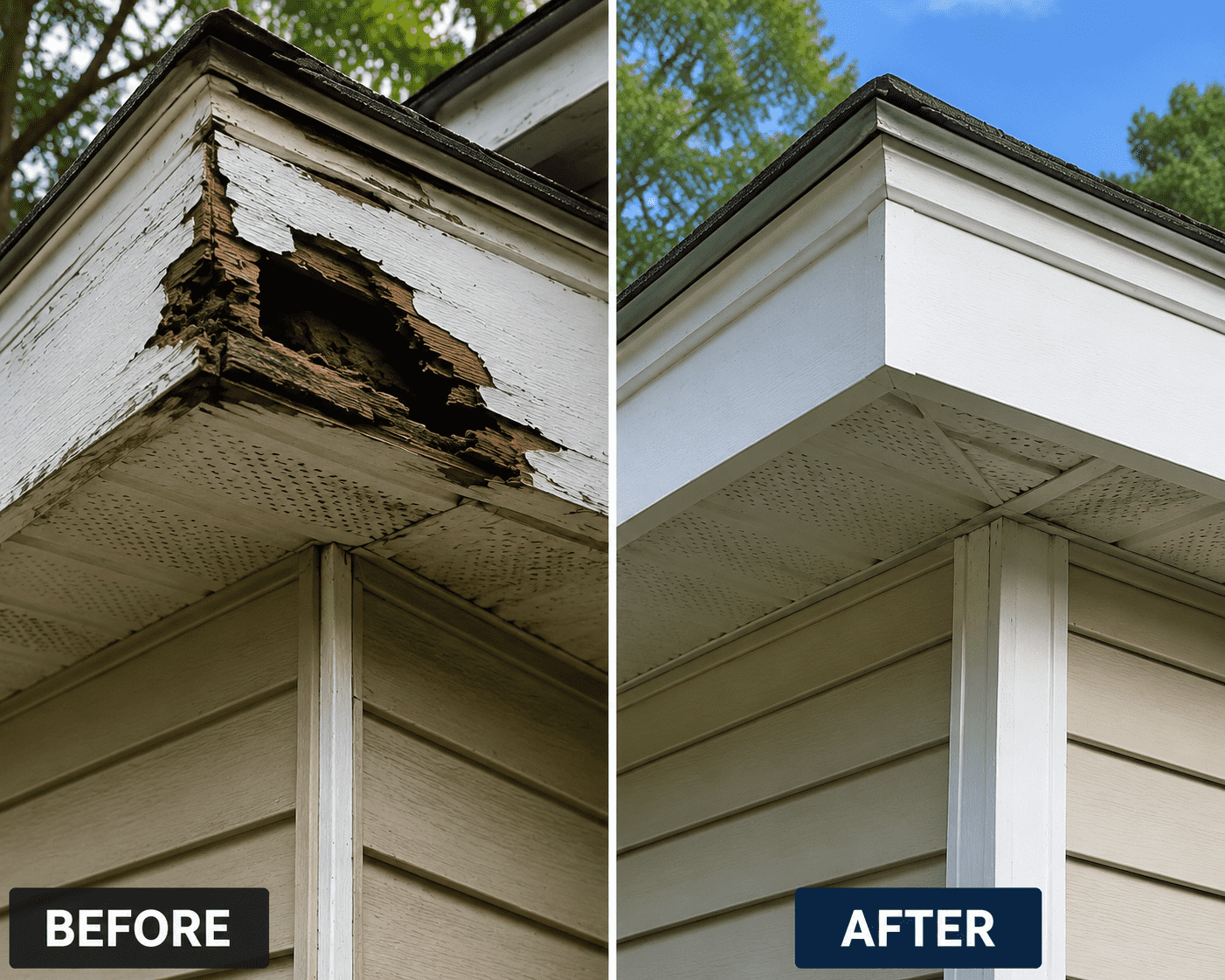
These sit right where your roof meets your walls. A clogged or overflowing gutter sends water straight onto the fascia, and from there it can spread into the roof edge. Peeling paint along the roofline is a common early sign.
4. Deck Posts, Railings and Stair Treads
Anywhere wood meets the ground, a fastener or another board, water gets trapped. Post bases, railing joints and the ends of stair treads are classic trouble spots. Because decks carry weight and people, rot here is a safety issue as well as a cosmetic one.
5. Siding Near the Ground and Under Downspouts
Siding that sits close to soil, or takes a constant splash from a downspout, absorbs moisture over time. Look for swelling, dark staining or boards that have started to separate.
6. Porch Columns and Porch Ceilings
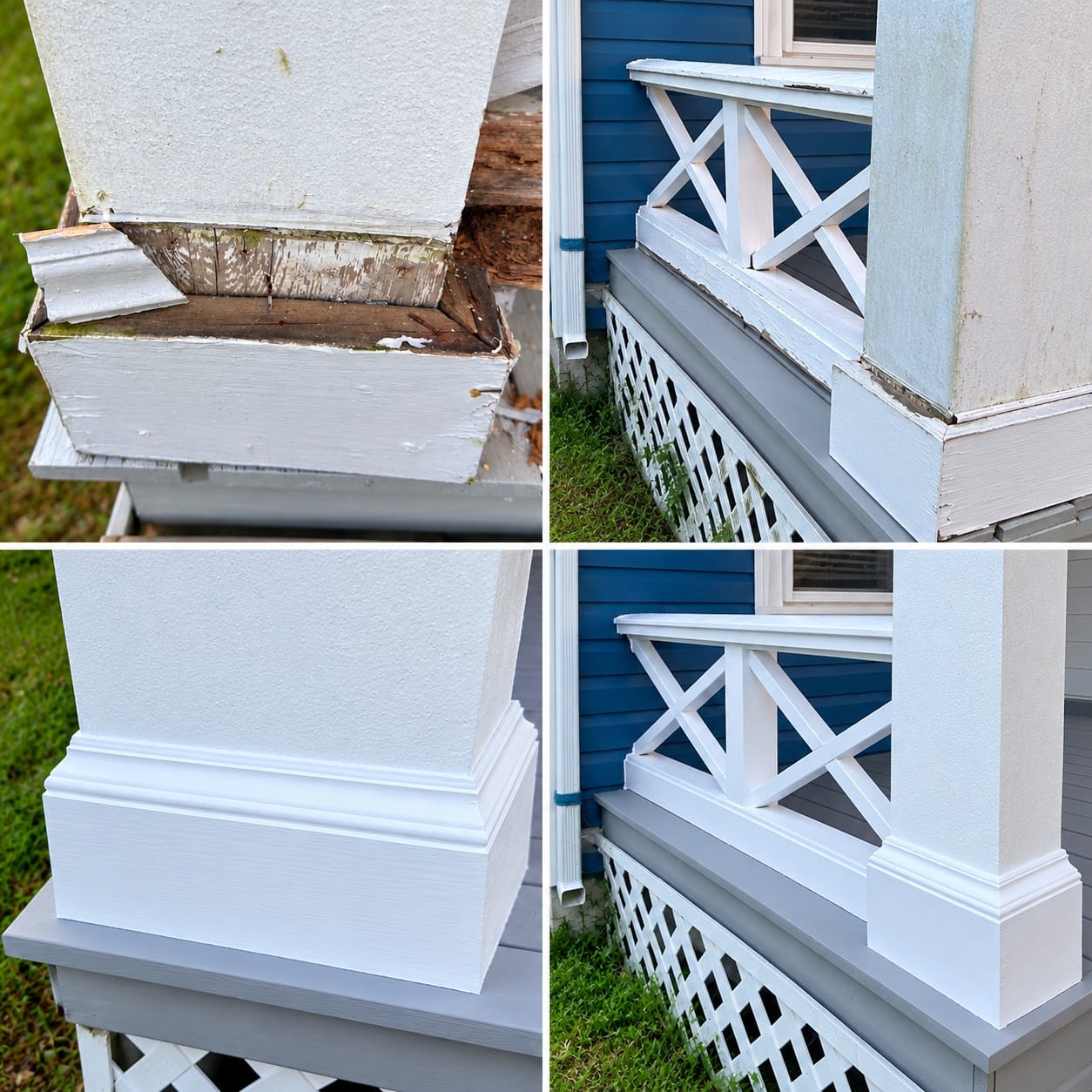
Column bases soak up water, and porch ceilings can hide leaks from above. Stains, sagging or flaking paint are worth a closer look.
Why Waiting Costs More
Wood rot does not stay put. Once moisture is in the wood, fungus keeps feeding, and a small soft patch can grow into a rotted frame, damaged sheathing or a compromised structural piece. It also invites termites and carpenter ants, which love damp, softened wood. A repair that could have been simple becomes a bigger project the longer it sits.
What Professional Wood Rot Repair Looks Like
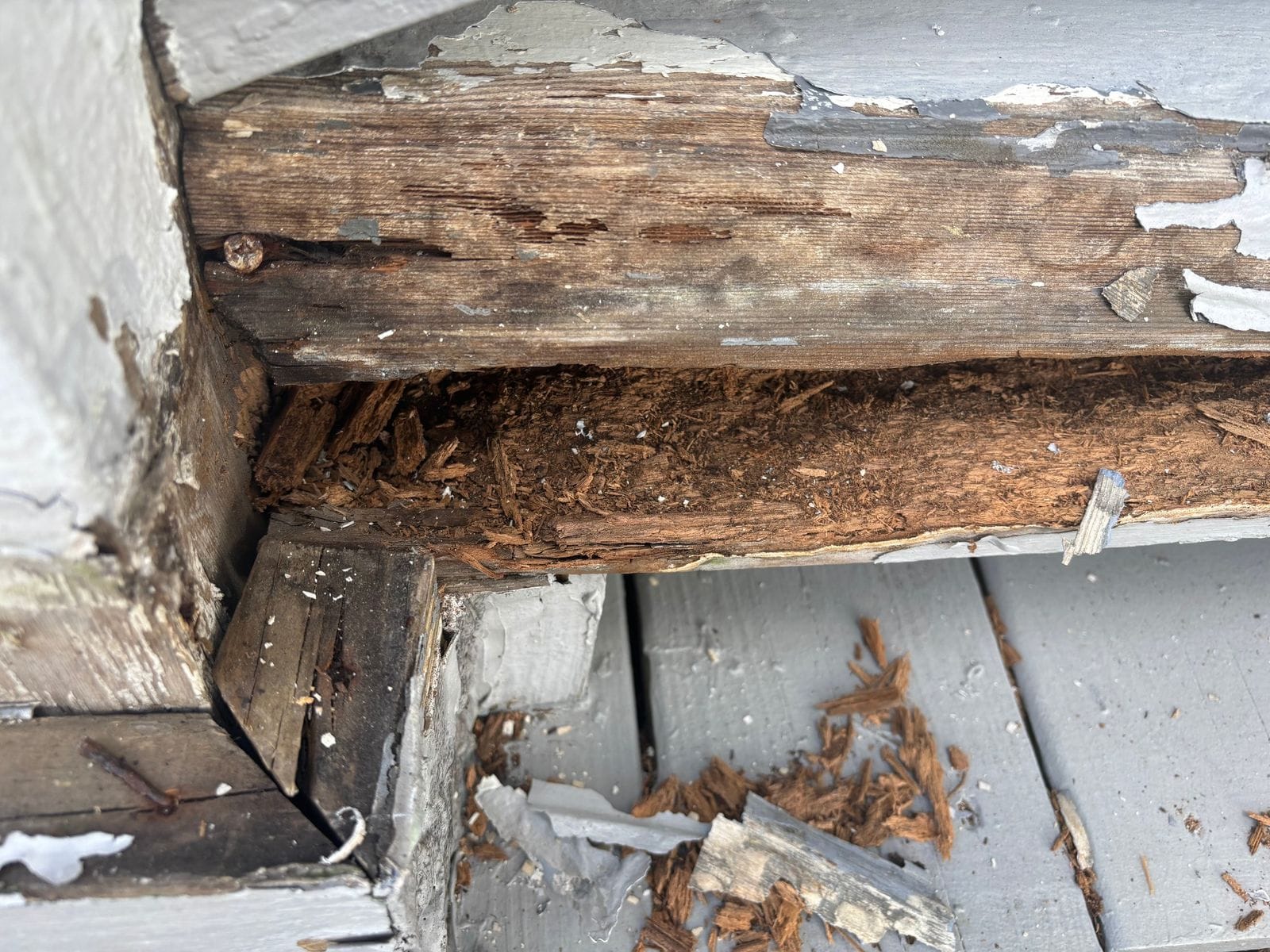
A proper repair is more than a patch of filler over a problem. The right approach means finding the source of the moisture, cutting out all the damaged wood, replacing or rebuilding the section, sealing it and finishing it so it blends with the rest of your home. Fixing the cause matters just as much as fixing the damage, or the rot returns.
Easy Habits That Help Prevent Rot
Keep gutters clean and downspouts directing water away from the house. Re-caulk gaps around windows and doors when you see cracks. Repaint or reseal exposed wood before the old finish fails. Trim back shrubs that trap moisture against siding.
Not Sure If It’s Rot? Let Us Take a Look
If you found a soft spot, peeling paint that won’t stay put, or a frame that just doesn’t feel right, don’t guess. ECMJ Homes can inspect the area, tell you what is going on and give you a clear plan to fix it right.
Call 804-719-1657 or visit ecmjhomes.com to book your free estimate today. ECMJ Homes proudly serving Richmond, VA and surrounding areas.