Poke It Before It’s Too Late: The 10-Minute Wood Rot Test for Richmond Homes
By Emmanuel Gomez, ECMJ Homes · · 4 min read
Wood rot rarely announces itself. It hides under a fresh coat of paint, behind gutters and beneath the trim you walk past every day. By the time the damage is obvious, a small fix has often grown into a major repair.
For homeowners in Richmond and Central Virginia, the risk is real. The good news is that you can check your own home in about ten minutes with nothing more than a flathead screwdriver and a flashlight.
Why Richmond Homes Are So Vulnerable to Wood Rot
Wood rot is a fungal decay that needs moisture to survive. Central Virginia gives it plenty to work with.
- Humid summers. Long stretches of damp, warm air keep exterior wood from drying out fully.
- Heavy storms. Sudden downpours push water into seams, joints and cracked caulk.
- Freeze and thaw winters. Water that seeps into small gaps expands as it freezes and widens them.
- Older housing stock. Many Richmond neighborhoods have homes with decades-old windows, porches and trim that have been repainted many times but never inspected underneath.
- Neglected gutters. Overflowing water runs straight down fascia boards and siding.
The Screwdriver Test: A 10-Minute DIY Check
Healthy wood is firm and resists the tip of a screwdriver. Rotted wood gives way.
- Walk around your home and choose any painted or stained wood that looks dark, bubbled, cracked or soft.
- Press the tip of a flathead screwdriver into the surface with moderate pressure.
- If the tip sinks in easily, the wood crumbles, or it feels spongy, you have rot.
- Probe outward from that spot to find where solid wood begins. That edge shows how far the damage has spread.
- Take photos of every problem area so you can compare over time or share them with a contractor.
Never judge by paint alone. Paint can stay smooth and glossy over wood that has turned to mush.
7 Hidden Places Wood Rot Starts
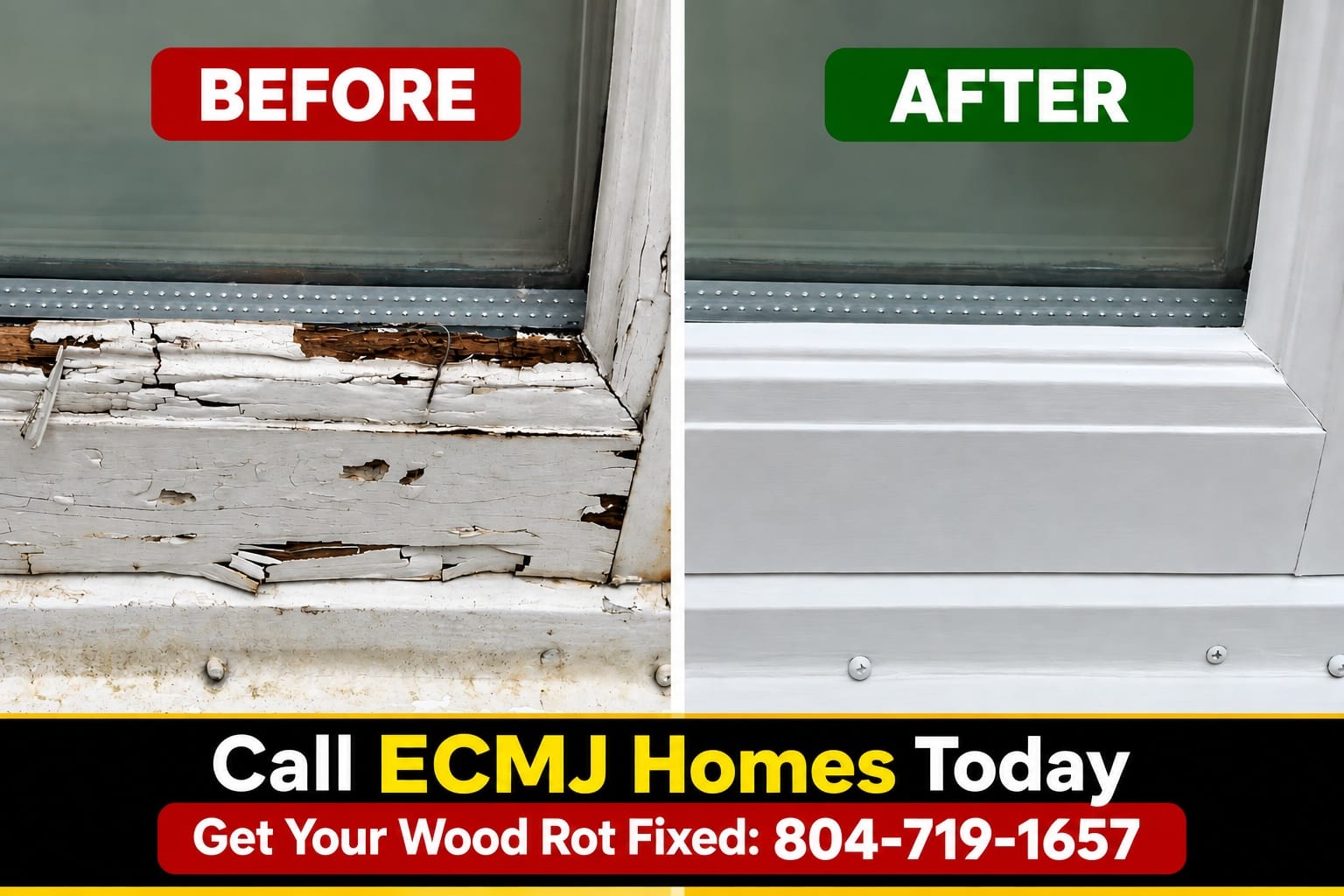
- Window sills and sashes. Water pools on flat sills and seeps into the corners.
- Door frames and thresholds. The bottom of the frame sits in constant contact with splashing rain and snowmelt.
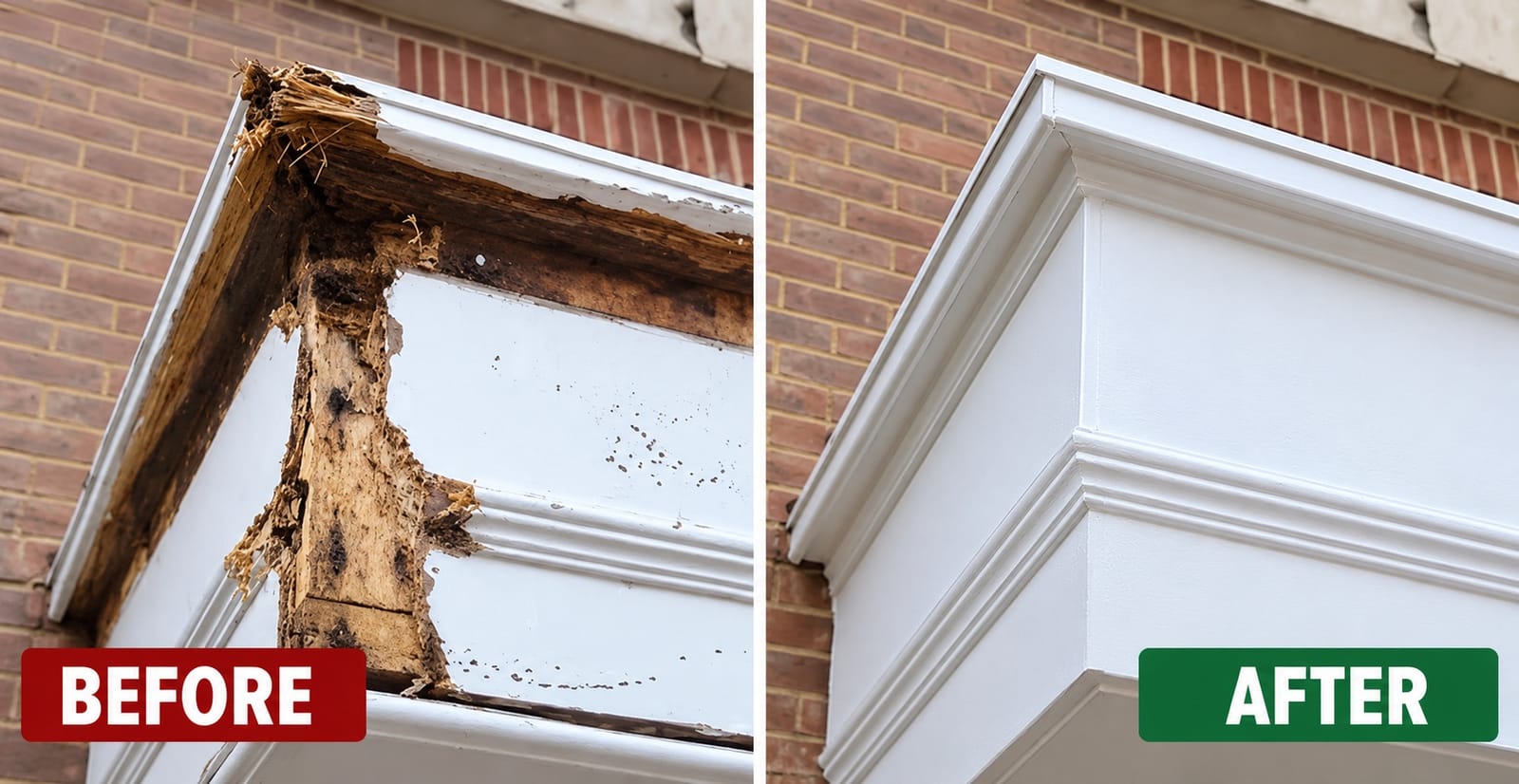
- Fascia and soffits. A leaking or overflowing gutter soaks these boards year after year.
- Deck posts and ledger boards. Where the deck meets the house, trapped moisture can quietly rot structural wood.
- Siding near the ground. Splashback from soil and mulch keeps lower boards damp.
- Porch columns and steps. Column bases and stair stringers hold water where end grain is exposed.
- Trim under roof edges. Small roof leaks travel along the wood and show up as stains or peeling paint far from the source.
The “Dry Rot” Myth
You will often hear the term dry rot, but it is a bit misleading. All wood rot needs moisture to begin. The word “dry” simply describes how brittle and crumbly the wood looks once the decay has advanced. That means the real fix is not just replacing rotted wood. It is finding and stopping the water source that caused it.
Repair or Replace?
The right answer depends on how far the rot has traveled.
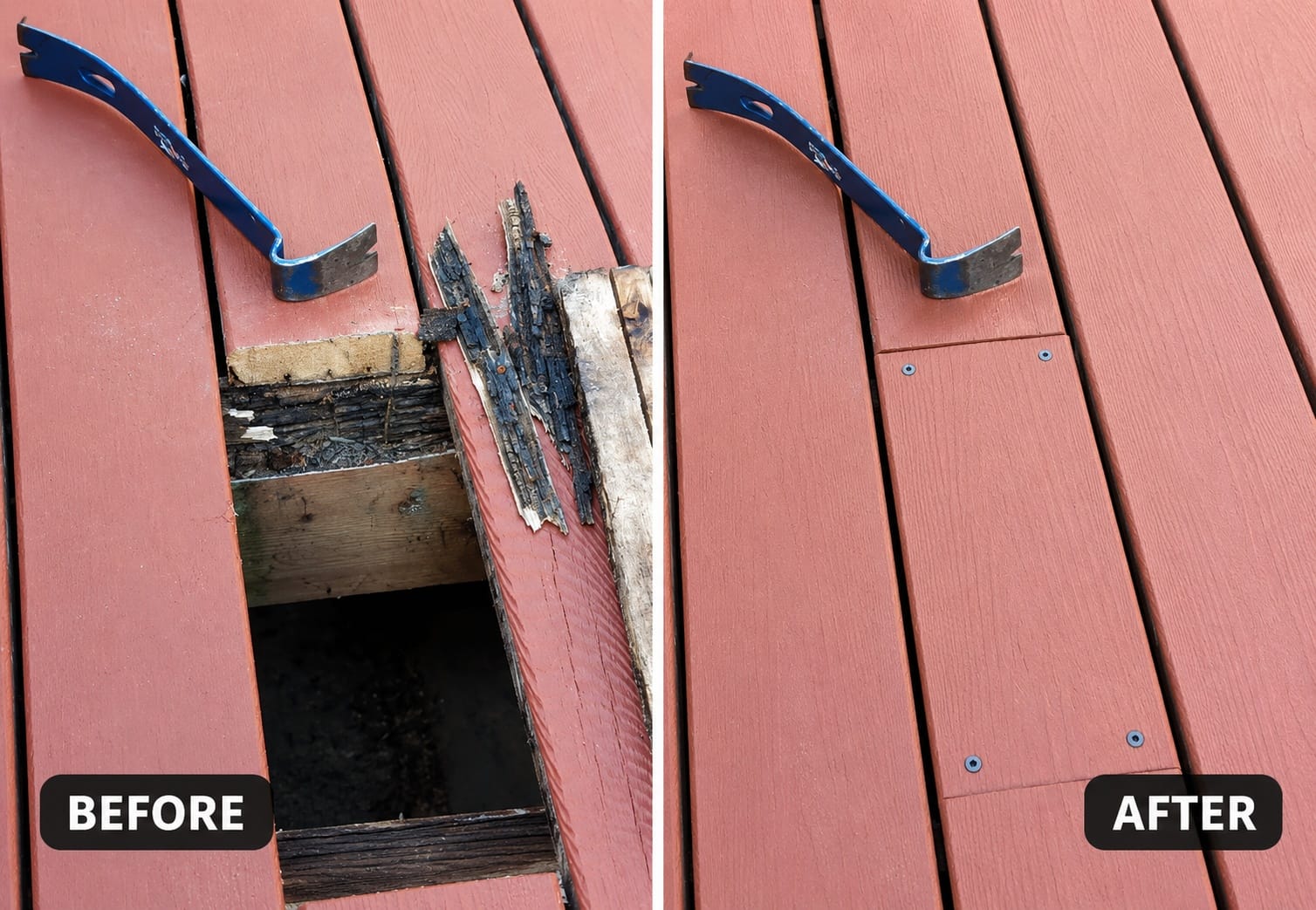
- Small, surface-level damage can sometimes be cut out and repaired, then sealed and repainted.
- Deeper or widespread damage usually calls for cutting out the affected section and installing new wood or a moisture-resistant trim material.
- Rot in structural areas, such as deck ledgers, sills and framing, needs prompt professional attention for safety.
Repairs that skip the cause tend to fail. A good contractor will fix the leak, flashing or drainage issue along with the rotted section.
What Affects the Cost of Wood Rot Repair?
Every home is different, but the main factors are consistent:
- How much wood is damaged and how deep the rot goes
- How hard the area is to reach, such as second-story trim
- The type of material used for the replacement
- Whether hidden water damage is found behind the surface
- Painting and finishing after the repair
Catching rot early is the single best way to keep costs down.
Prevention Checklist for Richmond Homeowners
- Clean gutters in spring and fall, and after big storms
- Re-caulk windows, doors and trim joints when caulk cracks or shrinks
- Repaint or restain exterior wood before the finish fails
- Keep soil, mulch and plants a few inches away from siding
- Make sure downspouts carry water well away from the foundation
- Run the screwdriver test once or twice a year
Frequently Asked Questions
How fast does wood rot spread?
It depends on moisture and temperature, but rot can advance quietly for months or years behind a painted surface. Once it starts, ongoing moisture keeps feeding it.
Can I just paint over soft wood?
No. Paint only hides the problem and traps moisture inside. The rotted wood needs to be removed or properly repaired first.
Is wood rot covered by homeowners insurance?
Policies vary, and rot caused by long-term neglect is often excluded. Check your policy or speak with your insurer.
When should I call a professional?
If the rot is in a structural area, covers a large section, is hard to reach, or keeps coming back, it is time for an expert.
Get Trusted Wood Rot Repair in Richmond, VA
If your screwdriver test turned up soft spots, do not wait for the next storm season to make it worse. ECMJ Homes helps Richmond and Central Virginia homeowners find the source of the moisture, repair the damage and restore the finish so it lasts.
Call 804-719-1657 or visit ecmjhomes.com to request your free estimate today.