The 10-Second Screwdriver Test Every Richmond Homeowner Should Try Today
By Emmanuel Gomez, ECMJ Homes · · 3 min read
Walk outside right now. Go to the bottom corner of your front door frame, crouch down, and press your thumb into the wood.
Does it feel solid? Good.
Does it feel soft, spongy, or like it’s giving way? Keep reading, because you may have a problem you can’t see from the driveway.
Why Richmond Homes Are Wood Rot Magnets
Central Virginia is hard on wood. Humid summers, heavy storms, damp springs, and winter freeze-thaw cycles all keep exterior wood cycling between wet and dry. Add aging paint, cracked caulk, and clogged gutters, and you get exactly what wood-rotting fungi need.
Wood rot isn’t a stain or a cosmetic flaw. It’s a living organism eating your house, and it doesn’t stop on its own.
“Dry Rot” Is a Myth
You’ll hear the term “dry rot” a lot, but rot fungi need moisture to survive. If you have rot, water is getting in somewhere. Fixing the wood without fixing the water source just means paying for the same repair again in two years.
The 10-Second Screwdriver Test
You need a flathead screwdriver, and you can do this on your own house tonight:
- Press the tip firmly into the wood you’re testing.
- Healthy wood resists and the screwdriver barely dents it.
- Rotted wood gives way. The tip sinks in easily, and the wood may crumble, flake, or come away in soft chunks.
Test several spots. Rot often starts small and spreads underneath a paint job that still looks fine.
7 Sneaky Places Wood Rot Hides
1. Door thresholds and the bottom of door frames. These take water splash and foot traffic all year.
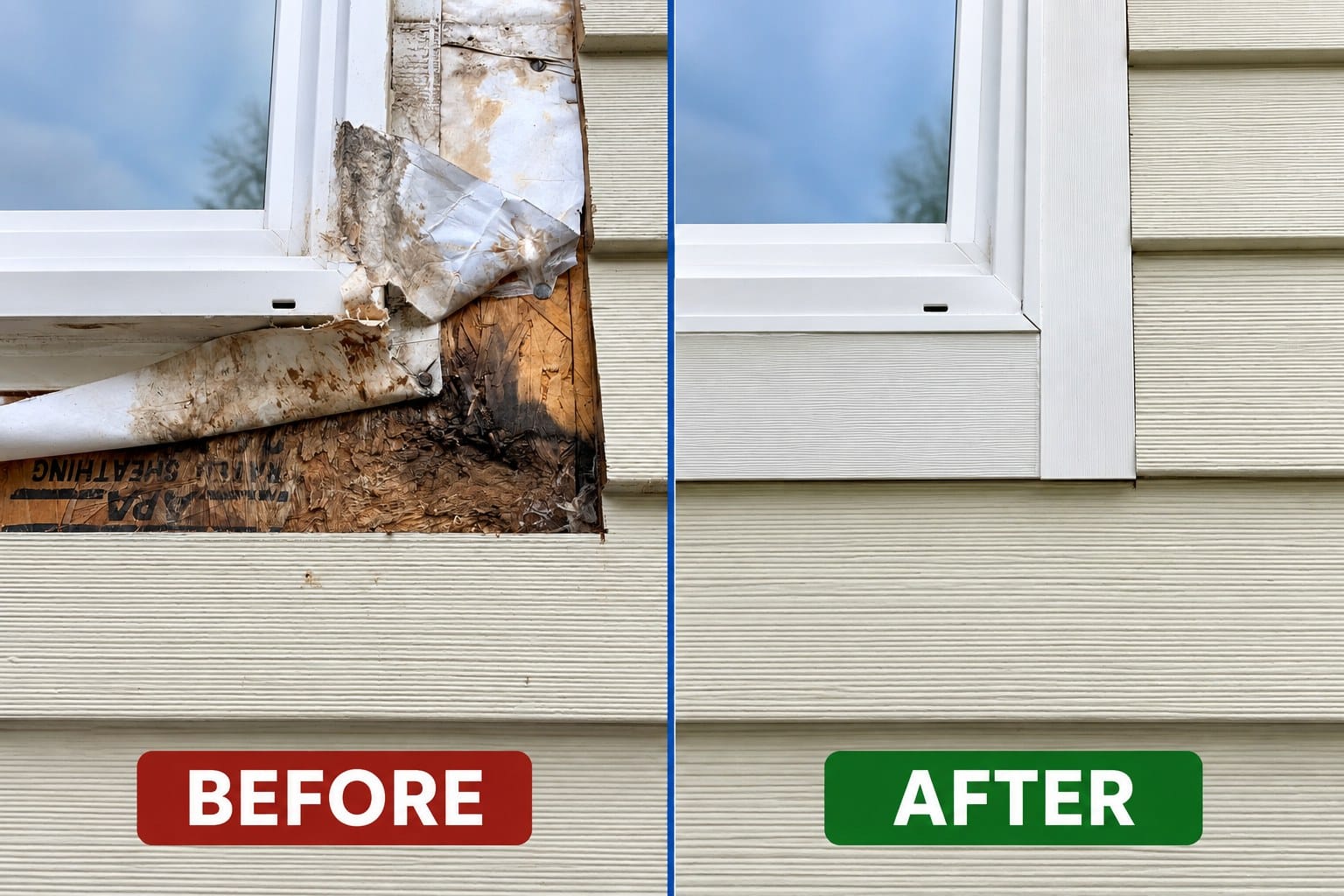
2. Window sills and trim. Water pools on the sill and slowly soaks in. Peeling paint here is a warning sign.
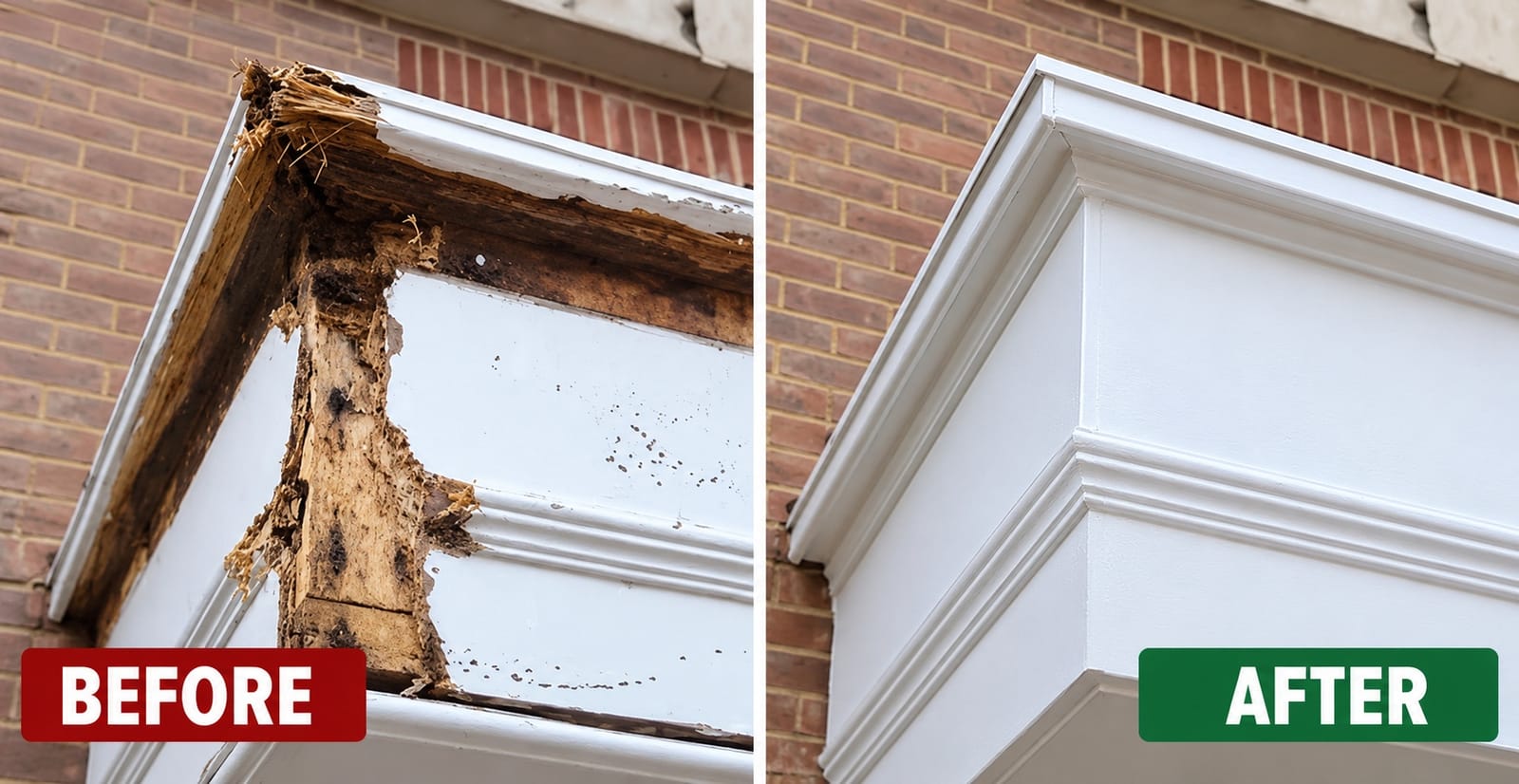
3. Fascia boards and soffits. These sit under the roofline and take the brunt of overflowing gutters.
4. The bottom edge of siding. Look at the lowest boards, where splashback and ground moisture collect.
5. Deck posts, railings, and stair stringers. Anywhere wood touches the ground or holds standing water is at risk.
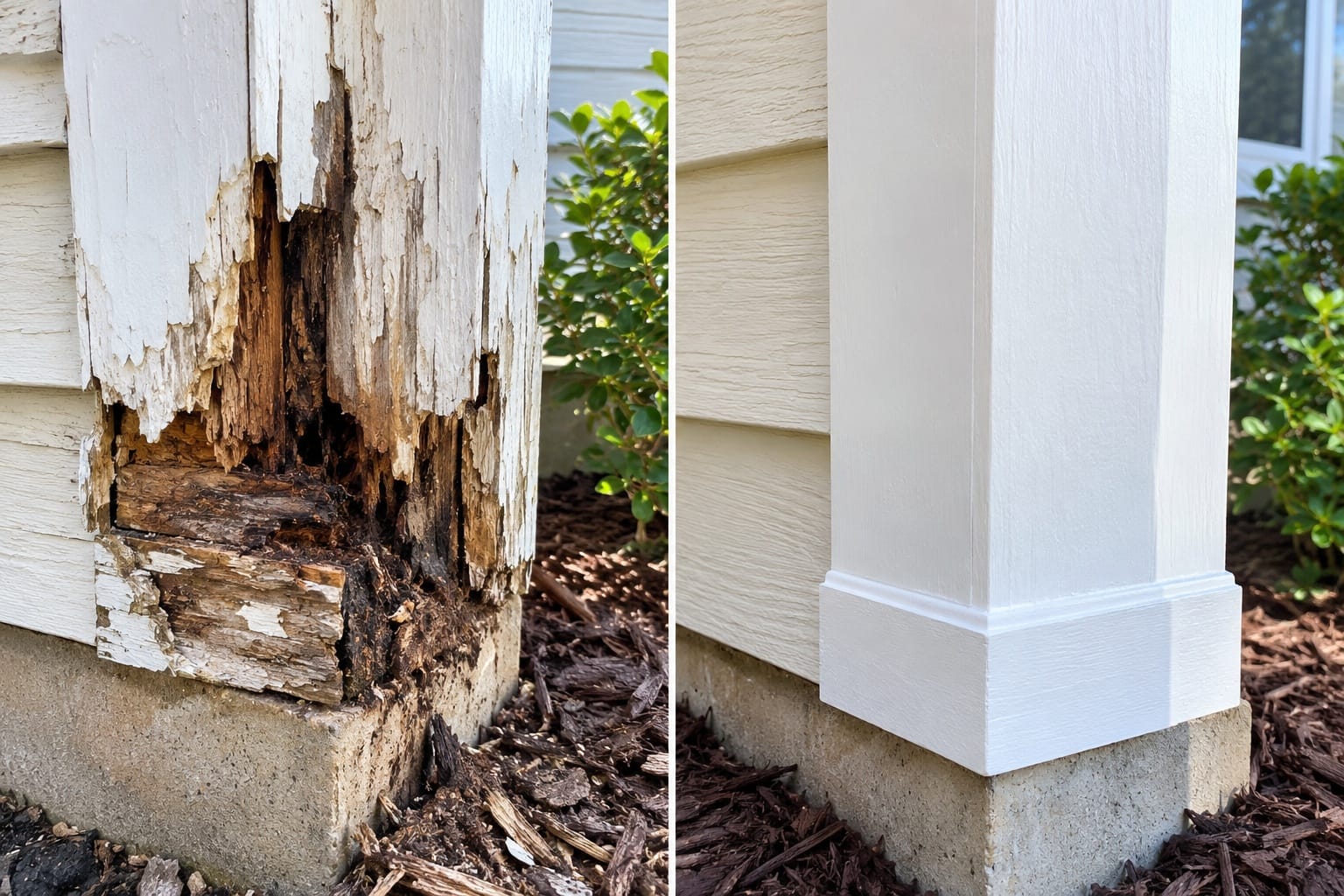
6. Porch columns and porch ceilings. The base of a column is a classic rot spot.
7. Garage door trim. It’s easy to forget, and it’s usually low, exposed, and damp.
Rot Brings Friends
Damp, decaying wood attracts termites and carpenter ants, and moisture problems can lead to mold. What looks like a small soft spot on the trim can be the first sign of a bigger problem, so it’s worth having someone take a proper look.
Small Fix Now vs. Big Fix Later
Caught early, wood rot often means repairing or replacing a section of trim, sill, or board, then sealing and repainting it properly. Left alone, it spreads into framing, subfloors, and structural pieces, and the repair gets bigger, messier, and more expensive.
The rule of thumb: if you can poke a screwdriver into it, it’s time to act.
What You Can Do Yourself
- Clean your gutters and make sure downspouts carry water away from the house
- Re-caulk gaps around windows, doors, and trim
- Touch up peeling or cracked paint before water gets under it
- Trim back shrubs and branches touching your siding
- Do the screwdriver test twice a year, in spring and fall
When to Call a Pro
Call in a professional if you find:
- Soft wood that goes deeper than surface level
- Rot in structural areas like posts, framing, subfloors, or beams
- Repeated rot in the same spot, which points to an ongoing water problem
- Signs of pests along with the soft wood
- Wood that feels solid on the surface but sounds hollow when tapped
A good repair removes all the damaged wood, fixes the moisture source, and finishes with primer and paint that actually protects the new wood. Patching over rot is the fastest way to pay for it twice.
Get Your Home Checked Before Small Becomes Big
At ECMJ Homes, we repair wood rot on homes across the Richmond and Central Virginia area, from a single rotted sill to trim, siding, decks, and more. We find the source of the problem, replace what’s damaged, and leave your home looking sharp and protected.
Call 804-719-1657
ecmjhomes.com
Found soft wood tonight? Send us a photo and we’ll tell you what we think.