Wood Rot in Richmond Homes: Why Our Humid Summers Are Quietly Wrecking Your Trim (And What to Do About It)
By Emmanuel Gomez, ECMJ Homes · · 4 min read
If you own a home in Richmond, Henrico, Chesterfield, or anywhere in Central Virginia, you’re living in one of the best climates in the country for wood rot to thrive. Hot, sticky summers. Heavy spring rains. Humidity that never really goes away. It’s great for growing tomatoes — it’s terrible for the wood on your house.
The frustrating part? Wood rot rarely announces itself. It doesn’t show up overnight like a burst pipe or a fallen tree limb. It creeps in slowly, hiding behind paint, under window sills, and inside porch columns, until one day you press your thumb into a windowsill and it sinks in like wet cardboard.
By then, what could’ve been a simple repair often turns into a much bigger (and pricier) project.
Why Richmond Homes Are Especially Vulnerable
Wood rot needs three things to take hold: moisture, warmth, and time. Central Virginia hands over all three, generously:
- Humidity that lingers. Our summers regularly sit above 70% relative humidity, which means wood never fully dries out between rain events.
- Older housing stock. Many Richmond neighborhoods — from the Fan to Bon Air to older pockets of Henrico — have homes with original wood trim, siding, and porches that are decades past their factory-fresh finish.
- Freeze-thaw cycles. Virginia winters aren’t brutal, but they’re inconsistent. Water gets into small cracks, freezes, expands, and widens the damage — then thaws and lets more water in.
- Shade and tree cover. Beautiful, mature trees are a hallmark of Richmond neighborhoods, but they also block sunlight that would otherwise help wood dry out after a storm.
Put it all together, and you’ve got a near-perfect breeding ground for fungal decay.
The Sneaky Spots Wood Rot Loves Most
When homeowners call us, the damage is almost always in the same handful of places:
- Window sills and frames — especially on the sides of the house that get the most rain exposure.
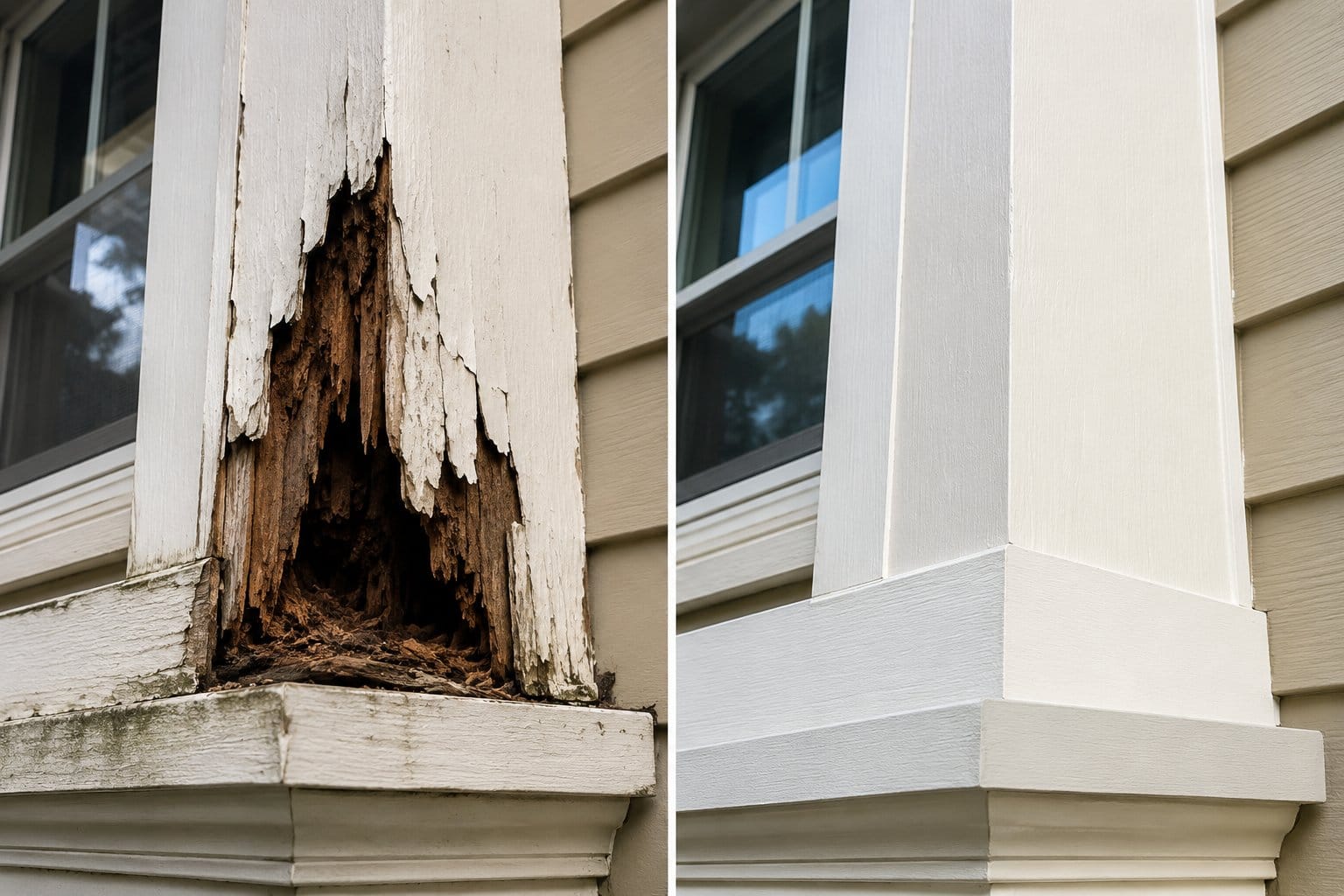
- Porch columns and posts — where wood meets concrete or soil and rarely gets to fully dry.
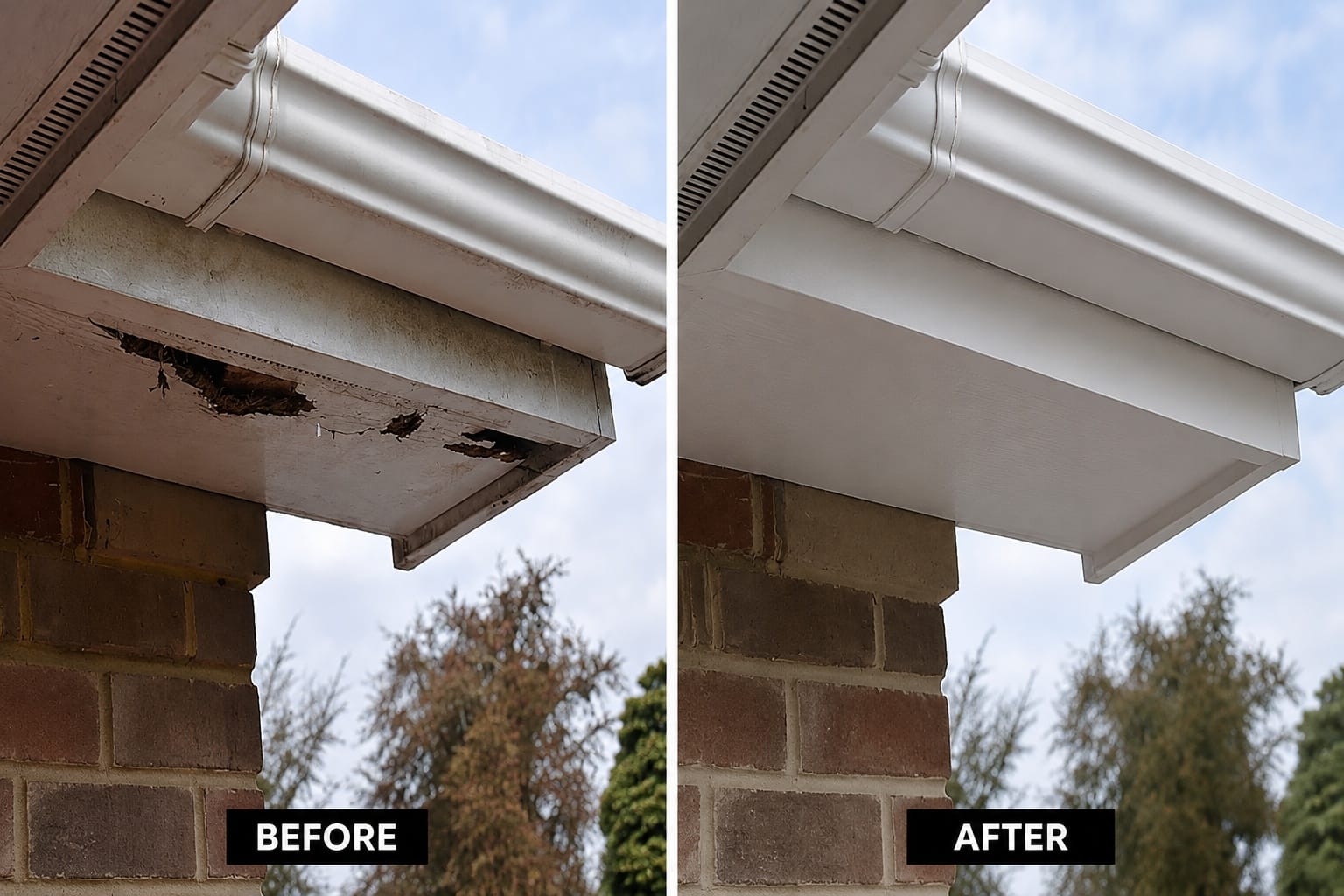
- Fascia and soffits — hidden above eye level, so damage goes unnoticed until there’s a sag or a stain.
- Deck ledger boards and stair stringers — structural pieces that take a beating and are easy to overlook.
- Door frames and thresholds — constant foot traffic hides early softness underfoot.
If any of these are original to a home built before the early 2000s, they’re worth a close look — especially if you haven’t repainted or resealed them in the last few years.
How to Catch It Before It Spreads
You don’t need to be a contractor to do a basic wood rot check. Grab a flathead screwdriver and walk your home’s exterior on a dry day:
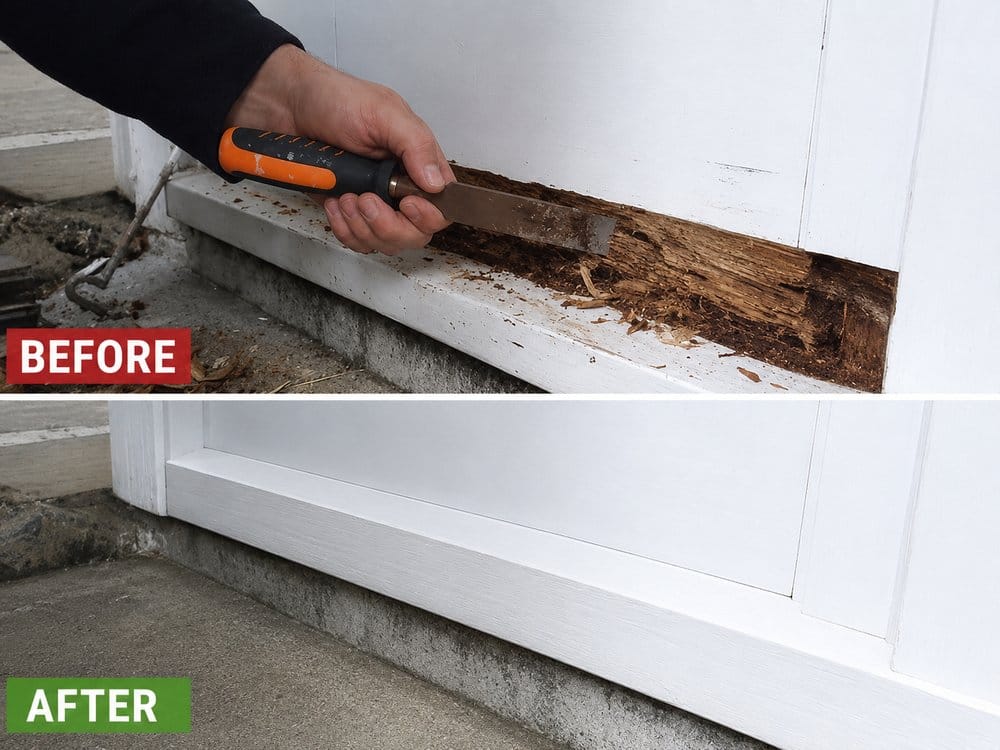
- Press, don’t just look. Gently press the tip of the screwdriver into trim, sills, and posts. Solid wood resists. Rotted wood gives way or crumbles.
- Check for paint that’s bubbling or peeling in one specific spot, rather than evenly across a surface — that’s often moisture trying to escape from underneath.
- Look for dark staining or a slightly spongy texture, particularly where two pieces of wood meet.
- Pay attention to smell. A musty, earthy odor near a window or door frame is a classic sign of decay working behind the scenes.
Caught early, wood rot repair is often quick and affordable — patch the damaged section, treat the surrounding wood, reseal, repaint. Caught late, it can mean replacing entire structural members, or worse, dealing with the rot’s cousin problems: pest infestations and water intrusion into the home itself.
Why “Just Paint Over It” Doesn’t Work
We hear this a lot: “Can’t we just sand it down and repaint?” Unfortunately, paint is cosmetic — it doesn’t stop or reverse decay that’s already active. Painting over soft wood is like putting a bandage over a wound that’s still infected. It looks better for a season, then the rot reasserts itself, usually in a bigger way.
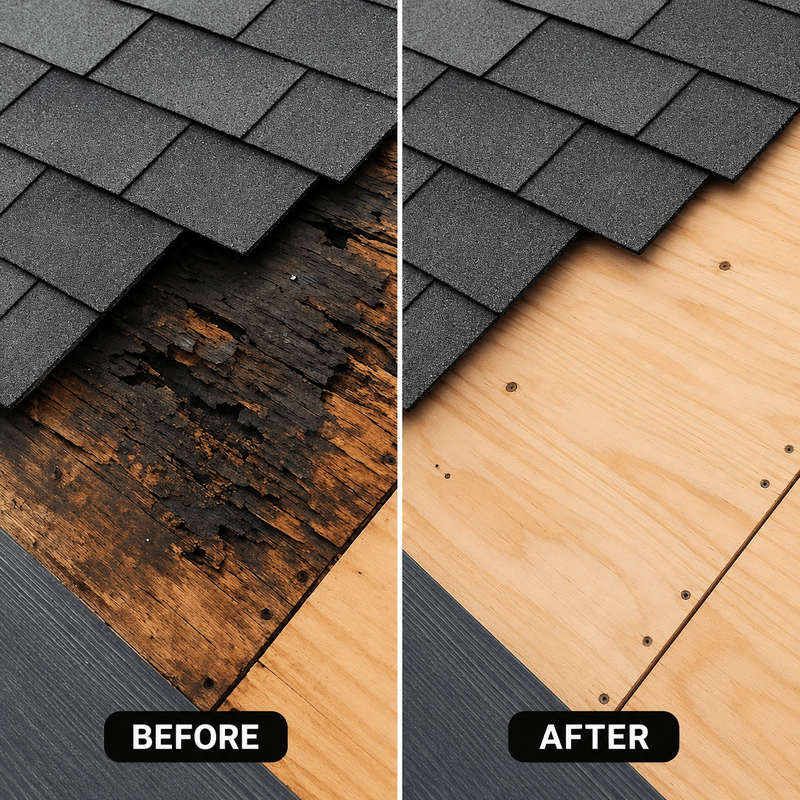
Real wood rot repair means removing the compromised material, treating the surrounding area to stop active decay, and rebuilding with materials suited to withstand Richmond’s climate — sometimes matching original wood, sometimes upgrading to more rot-resistant composite materials where it makes sense.
When to Call a Professional
A few soft spots on a windowsill might be a DIY weekend project. But if you’re noticing:
- Rot in more than one area of the house
- Soft spots near structural elements (porch posts, deck framing, door frames)
- Rot that seems to be spreading despite past repairs
- Any sign the damage has reached into the wall or framing behind the trim
…it’s time to bring in a professional. What looks like a small patch job on the surface can sometimes be the tip of a much bigger moisture problem underneath.
ECMJ Homes: Wood Rot Repair Built for Richmond’s Climate
At ECMJ Homes, we’ve repaired wood rot damage across Richmond, Henrico, Chesterfield, and the surrounding Central Virginia area — from single windowsills to full porch rebuilds. We don’t just patch and paint; we identify the moisture source causing the rot in the first place, so you’re not calling us back for the same repair in two years.
If you’ve got a soft spot you’ve been ignoring, or you just want a second opinion before it becomes a bigger problem, we’re happy to take a look.
Serving Richmond and Central Virginia 📞 (804) 719-1657 🌐 ecmjhomes.com