Wood Rot Repair in Richmond, VA: A Homeowner’s Complete Guide
By Emmanuel Gomez, ECMJ Homes · · 4 min read
Virginia’s humid summers and wet winters make wood rot one of the most common — and most overlooked — problems homeowners face. What starts as a small soft spot on a windowsill or porch post can quietly spread into a structural issue that costs thousands to fix if it’s ignored. At ECMJ Homes, we repair wood rot damage across Richmond and Central Virginia every week, and we’ve put together this guide to help you spot the warning signs early and understand your repair options.
What Causes Wood Rot?
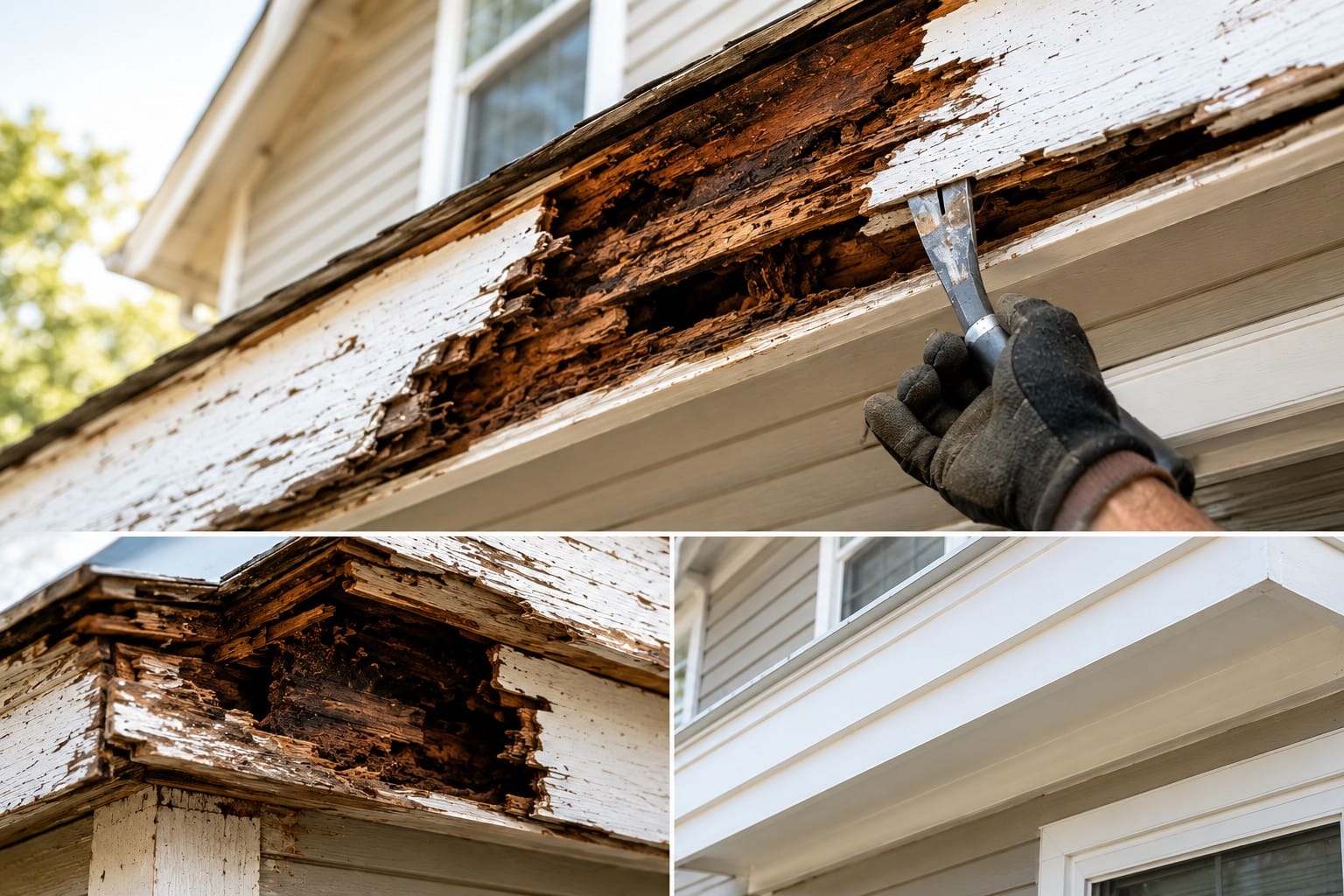
Wood rot is caused by fungi that break down the wood fibers, and it needs three things to thrive: moisture, oxygen, and the right temperature range. Richmond’s climate — with its humid summers and freeze-thaw winters — creates ideal conditions almost year-round. The most common culprits we see on local homes include:
- Clogged or damaged gutters that let water pool near fascia boards and roof edges
- Poor caulking or flashing around windows and doors
- Splash-back from sprinklers or downspouts hitting siding and trim
- Direct wood-to-soil contact on porch posts, steps, and deck framing
- Poor ventilation in crawl spaces and attics that traps humidity
Where Wood Rot Shows Up Most in Central Virginia Homes
Certain areas of a home are especially prone to rot, and they’re worth checking each spring and fall:
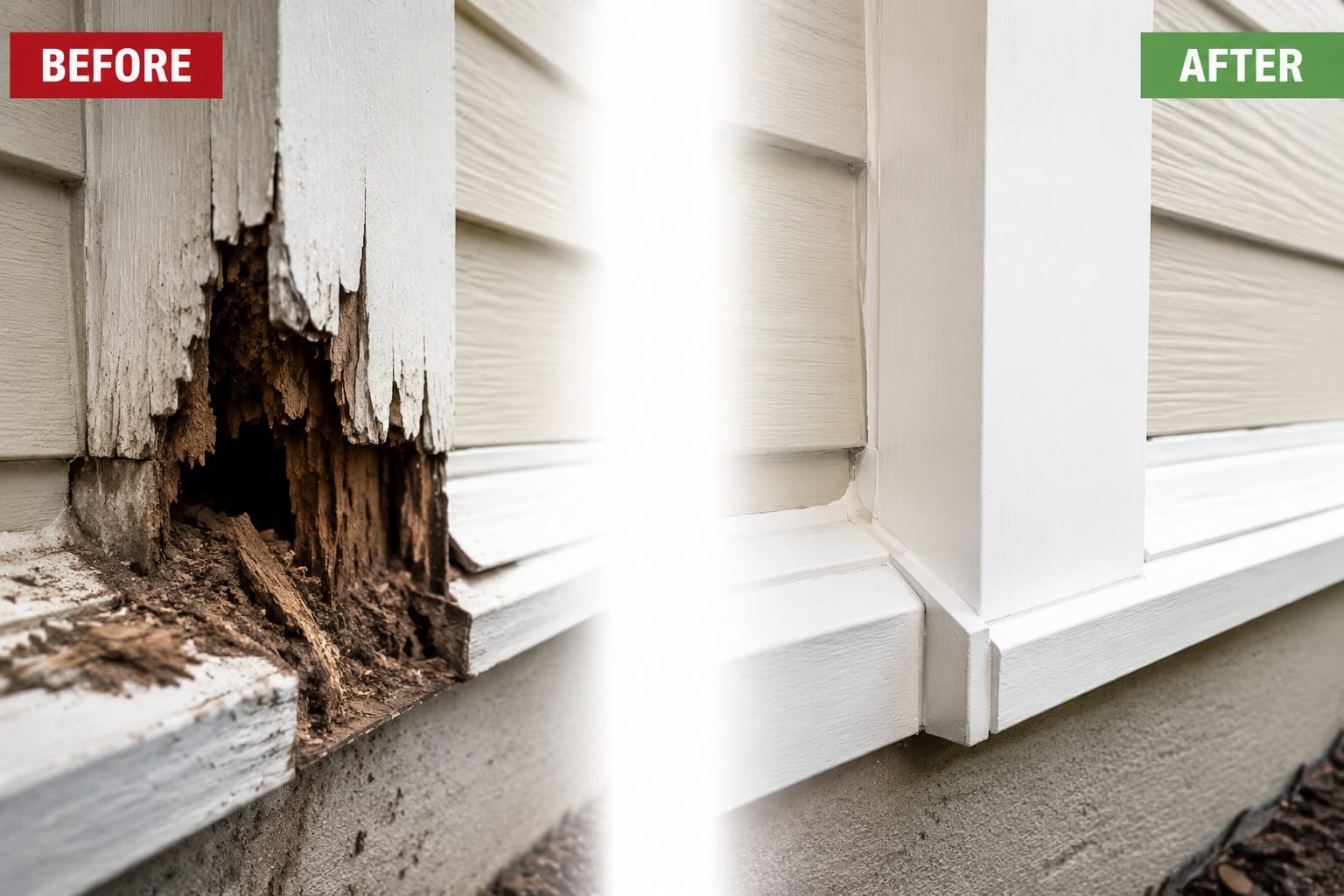
- Window sills and frames — moisture collects on the sill and works into the wood over time
- Fascia and soffits — often damaged by gutter overflow or ice dams
- Porch posts and railings — exposed to rain and often in contact with concrete or soil
- Deck framing and ledger boards — hidden rot here is a real safety concern
- Door frames and thresholds — especially exterior doors facing prevailing weather
- Siding, especially wood or fiber-cement trim — vulnerable where caulking has failed
Signs You Might Have Wood Rot
You don’t need to be a contractor to catch the early warning signs:
- Wood that feels soft, spongy, or crumbles when pressed with a screwdriver
- Paint that’s peeling, bubbling, or cracking in a localized area
- A musty smell near windows, doors, or crawl spaces
- Visible discoloration — dark staining or a bleached, gray appearance
- Sagging trim, railings, or deck boards
If you catch any of these signs, it’s worth having someone take a closer look before the damage spreads to framing or structural members.
Repair vs. Replace: How We Decide
Not every case of wood rot means tearing out an entire section. During an inspection, we test the surrounding wood with a probe to map out exactly how far the damage extends. From there:
- Minor surface rot can often be treated with epoxy wood consolidants and fillers, restoring strength without a full replacement
- Moderate rot usually means removing and replacing the affected board or section — a sill, a length of trim, a few deck boards
- Severe or structural rot requires replacing framing members, posts, or ledger boards, and addressing the moisture source so it doesn’t come back
The most important part of any wood rot repair isn’t the wood itself — it’s fixing whatever let the moisture in to begin with. Replacing rotted trim without correcting a gutter or flashing problem just means paying for the same repair again in a few years.
Our Wood Rot Repair Process
- Inspection — We identify every affected area, not just the obvious spot, using a moisture meter and probe
- Source correction — We pinpoint and fix the moisture source (gutters, flashing, grading, ventilation)
- Removal — Rotted material is cut back to solid, healthy wood
- Repair or replacement — Depending on severity, we use marine-grade epoxy systems or replace with pressure-treated or rot-resistant material
- Priming and painting — All repaired areas are primed and painted to match, protecting against future moisture
- Final inspection — We walk the repair with you to confirm it’s solid and looks right
How Much Does Wood Rot Repair Cost?
Costs vary widely depending on the extent of the damage and whether structural framing is involved — a small trim repair is a very different job than replacing a rotted deck ledger board. The best way to get an accurate number is a free, no-obligation inspection where we can see exactly what’s going on and give you options.
Preventing Wood Rot Before It Starts
A few habits go a long way in Richmond’s climate:
- Clean gutters at least twice a year
- Keep sprinklers and downspouts from spraying directly on siding or trim
- Re-caulk around windows and doors every few years
- Keep mulch and soil a few inches below siding
- Ensure crawl spaces and attics are properly ventilated
Serving Richmond and Central Virginia
ECMJ Homes has repaired wood rot damage on porches, windows, decks, and siding throughout the Richmond area. Whether you’ve spotted a soft spot on your windowsill or you’re dealing with a sagging deck, we’ll give you a straightforward assessment and a fair price.
Ready to get your wood rot problem fixed for good? Call ECMJ Homes at 804-719-1657 or visit ecmjhomes.com to schedule your free inspection.